
The Service Uniform of U.S. Army Lieutenant General Louis Truman
$1,100.00
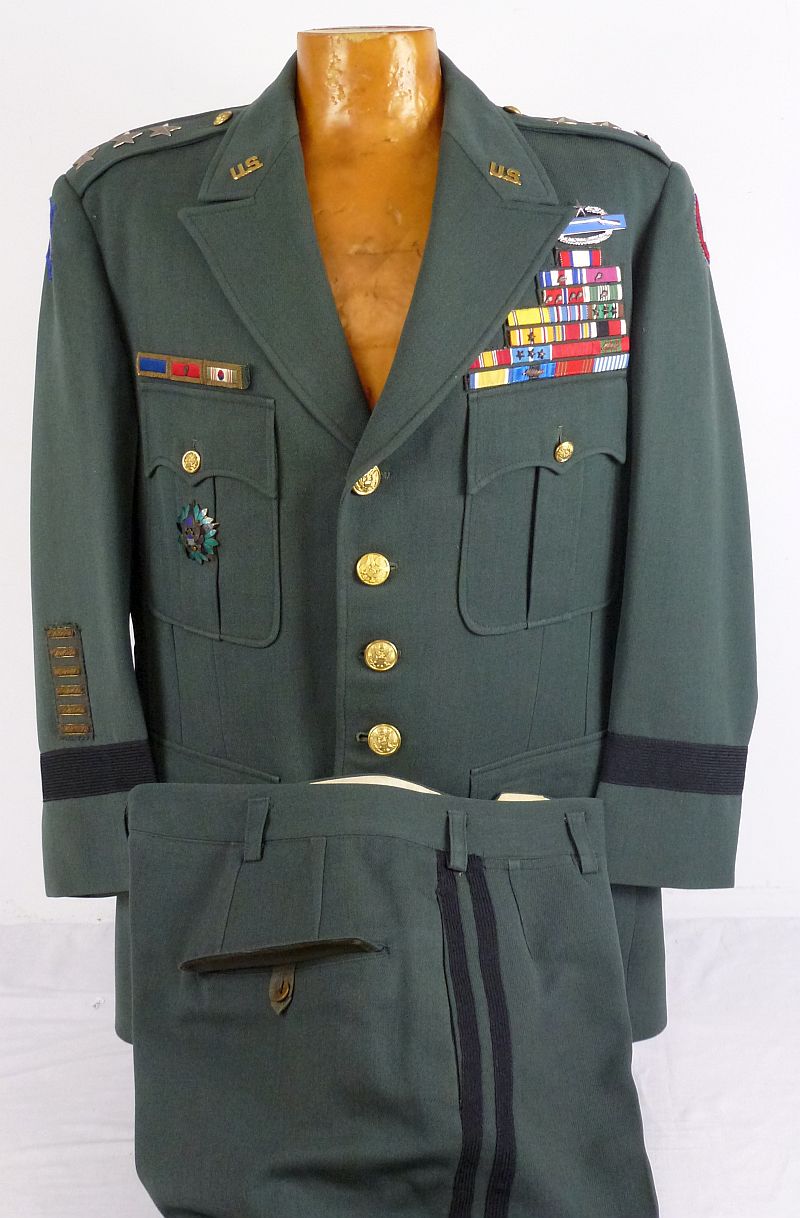
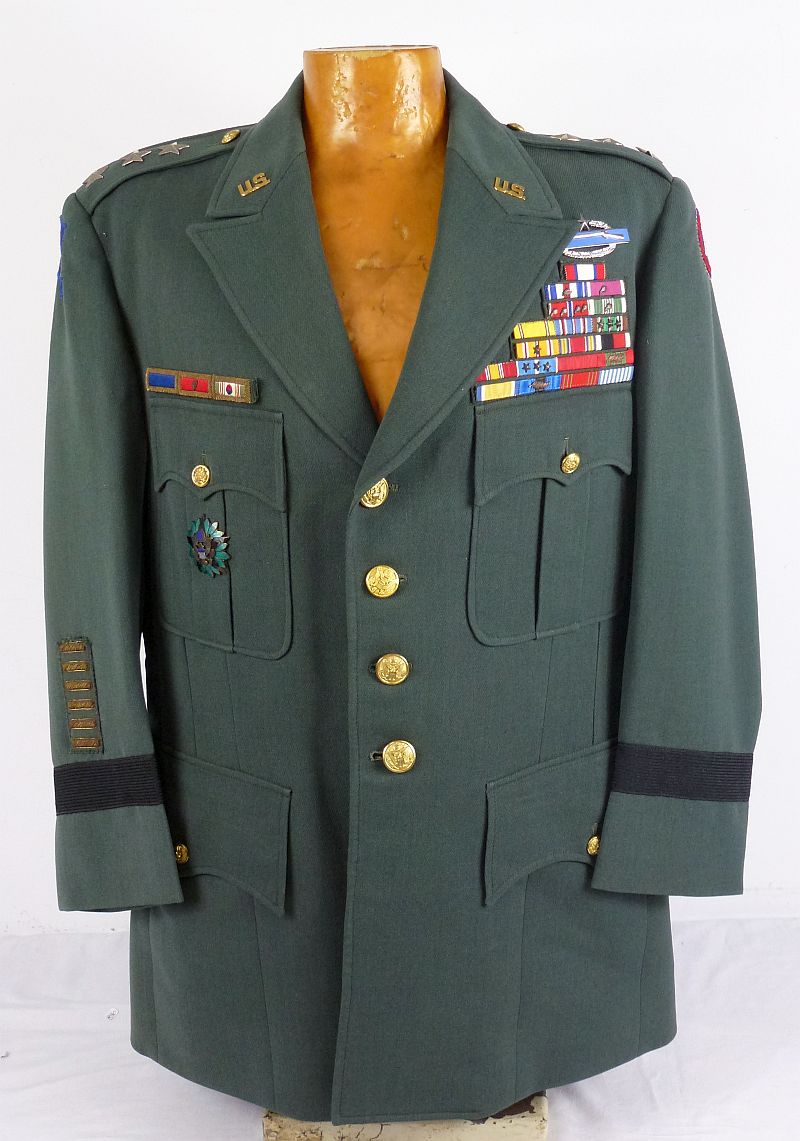
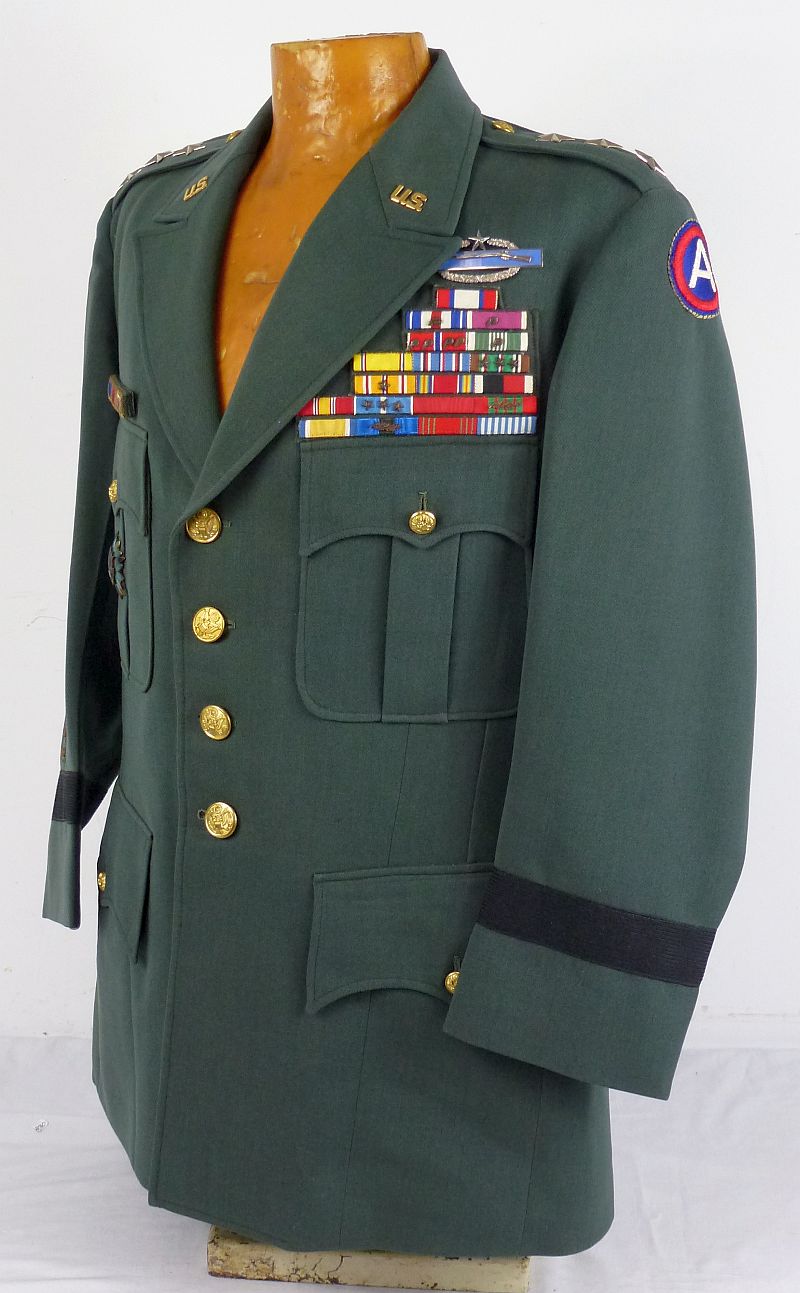
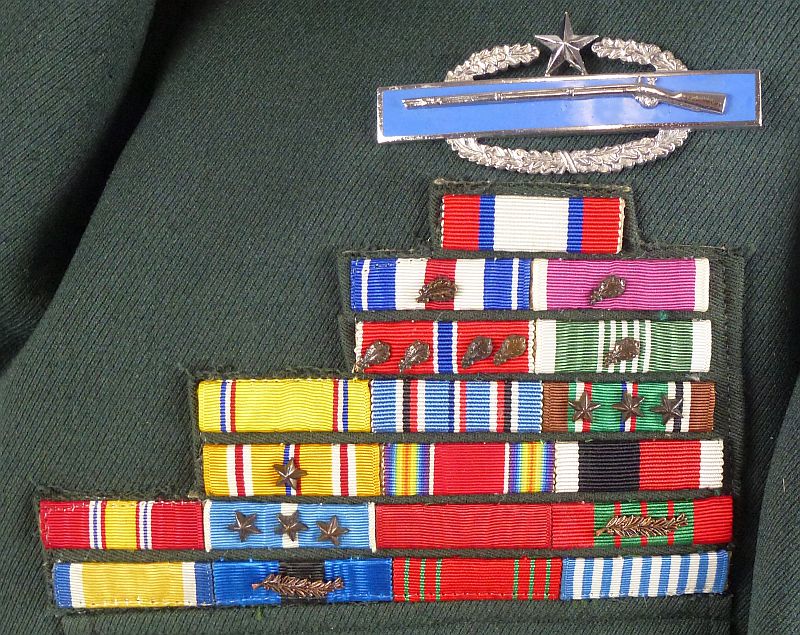
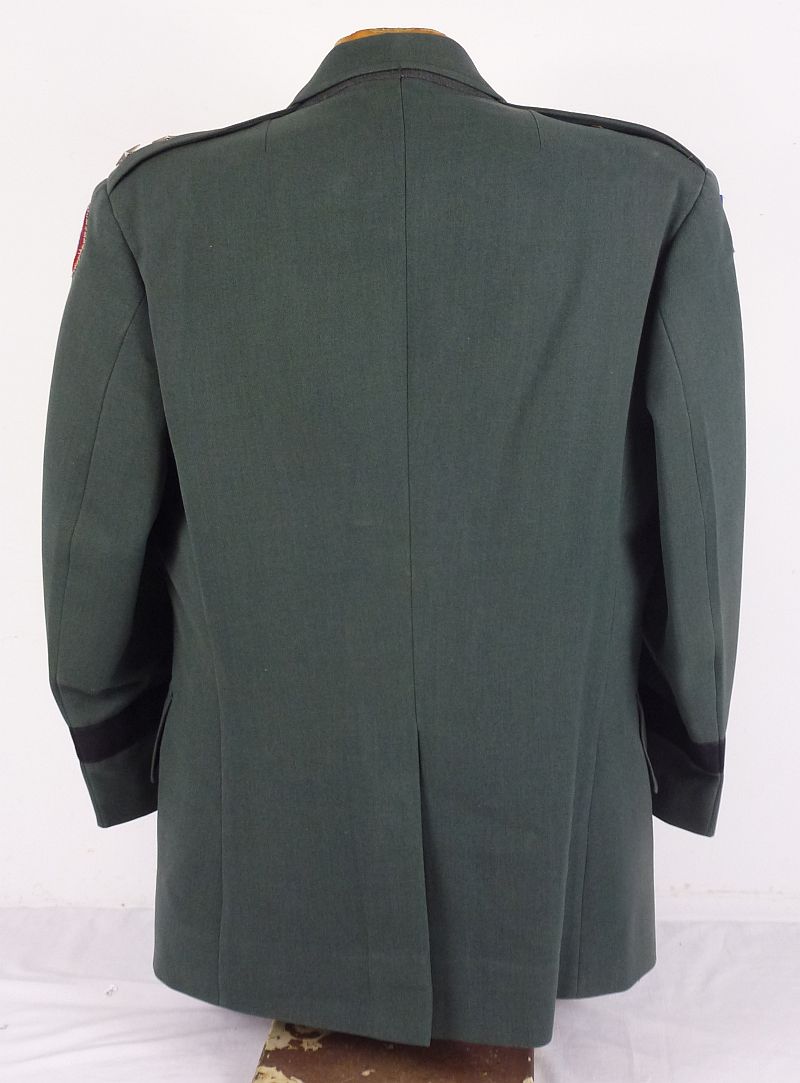
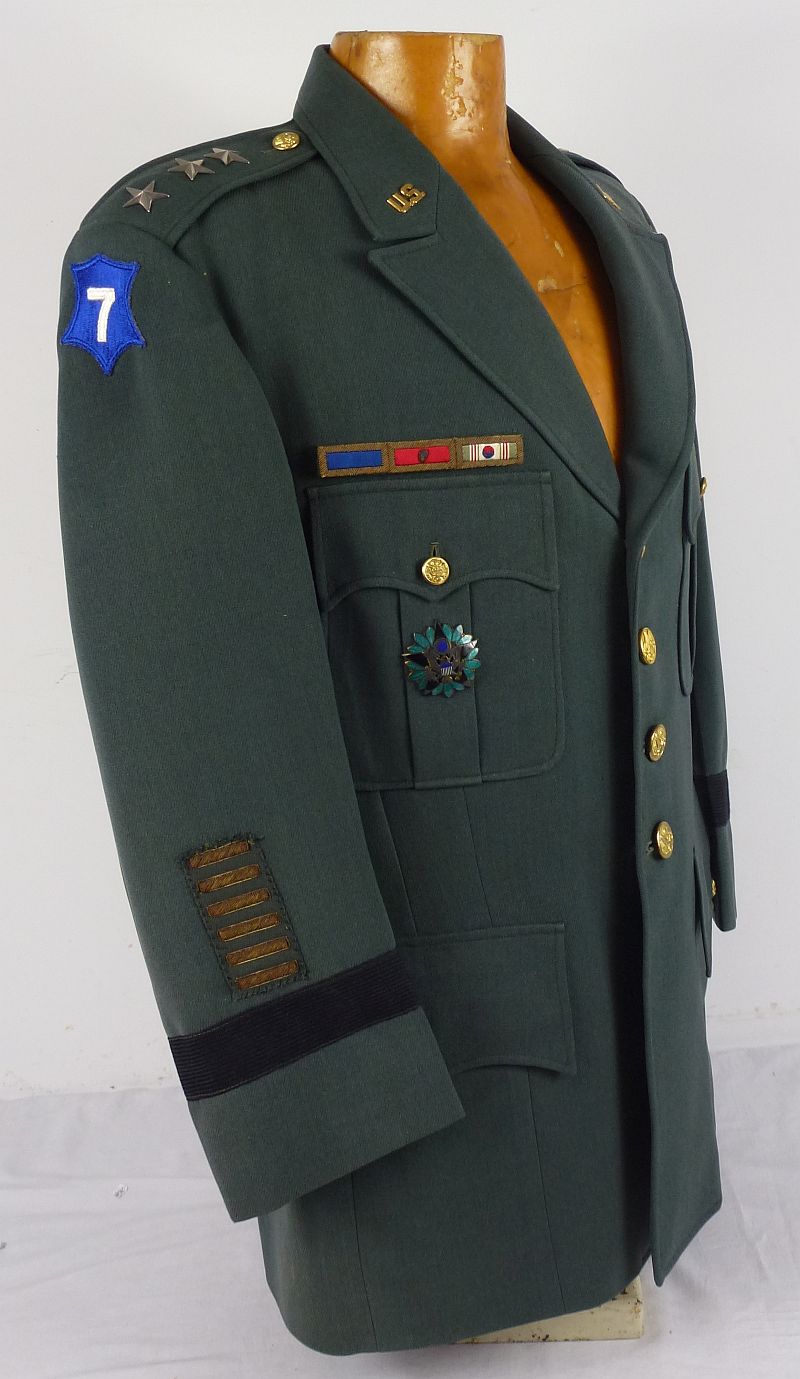
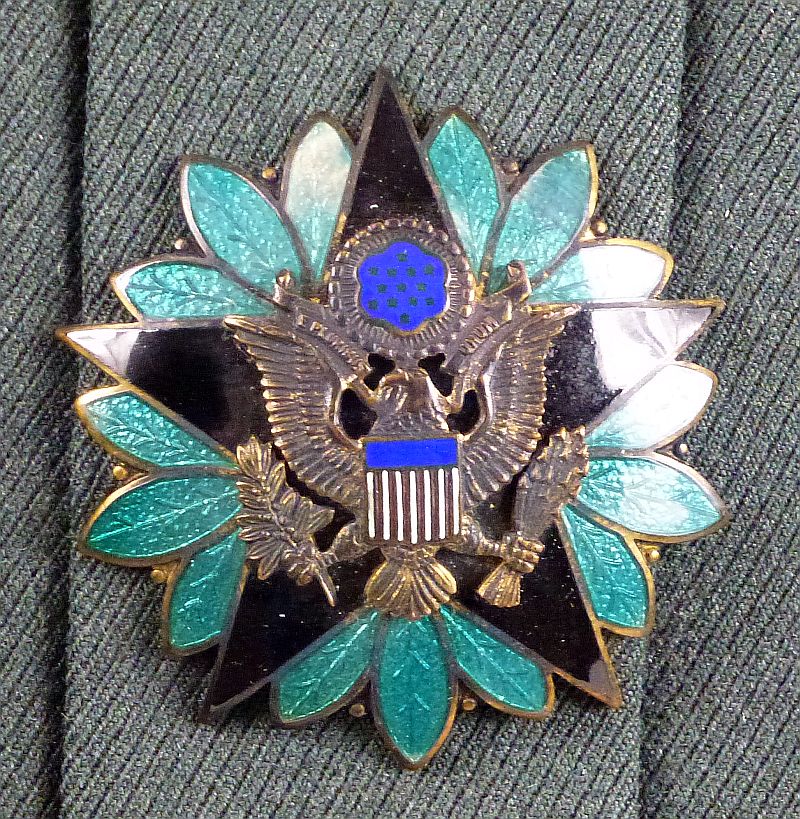
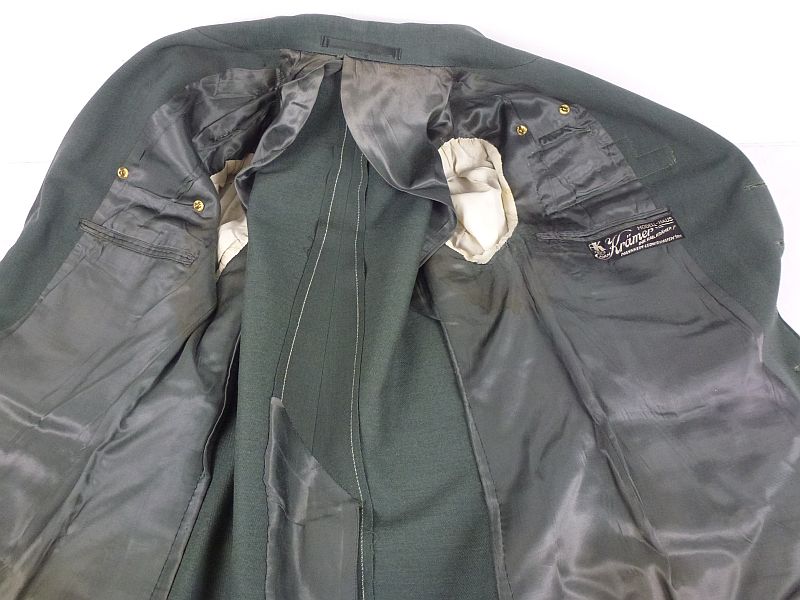
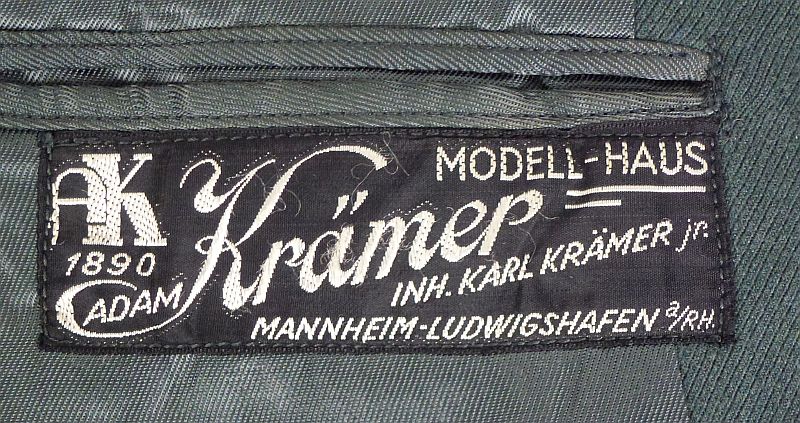
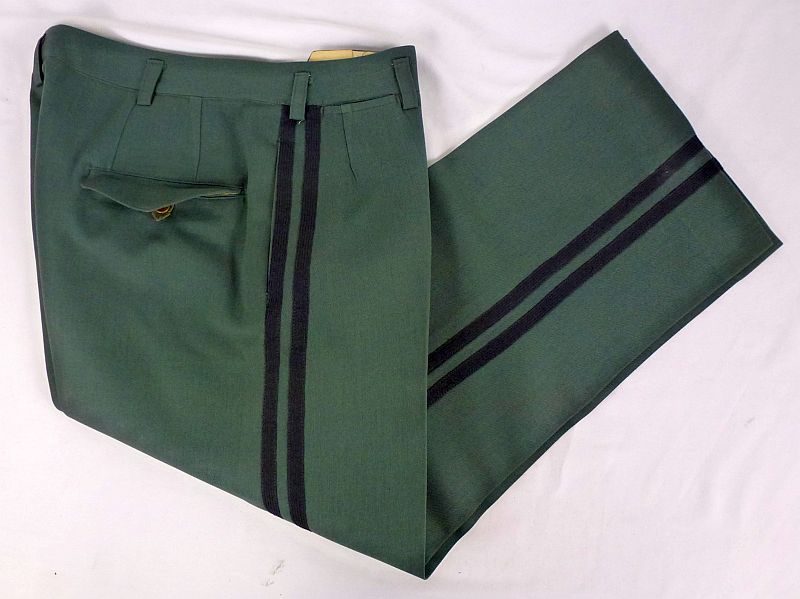
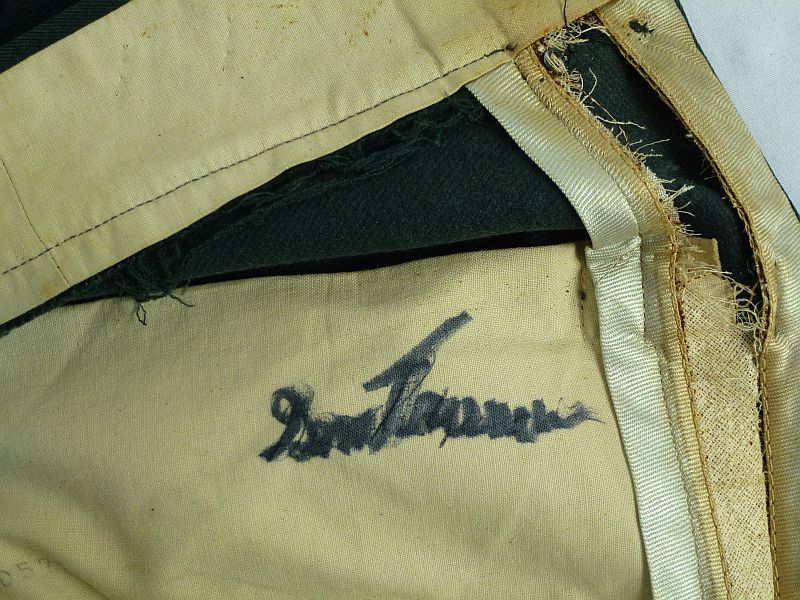
The uniform is comprised of the very high quality service tunic and trousers, as well as a khaki shirt. The uniform was tailored in Germany and it reflects the high standard of workmanship typical of German uniform clothiers. The tunic has the Third Army patch on the left shoulder, with a VII Corps patch on the right “combat” shoulder. The upper left breast displays the ribbons of multiple medals and decorations, both American and foreign, awarded to General Truman over service in multiple theaters of operations in both World War II and the Korean War. Above the ribbons is the Combat Infantry Badge, with a star reflecting a second award for Korean War service. On the lower right sleeve are six toned gold bullion World War II overseas service chevrons. On the right upper breast pocket is the General Staff badge, maker marked by N.S. Meyer. The trousers bears General Truman’s handwritten name. The uniform is in excellent condition.
In 1926, Truman enlisted in Company E, 140th Infantry Regiment, of the Missouri National Guard, stationed at Kennett, Missouri. In July 1928, he entered the United States Military Academy at West Point. Upon graduation in June 1932, he was commissioned an infantry second lieutenant.
Truman’s first duty assignment was with the 6th Infantry Regiment at Jefferson Barracks, Missouri. In 1936, Truman was assigned to Fort Benning, Georgia, where he completed the Infantry School and the Tank School. Next, he served a two-year tour of duty at Fort Davis, Panama, in the Canal Zone, and returned to Fort Benning in September 1940 as a staff and logistics officer in the 2nd Armored Division’s 14th Armored Brigade. The 2nd Armored Division at the time was commanded by one of the Army’s fastest-rising officers, Brigadier General George S. Patton, Jr.
In January 1941, Truman was transferred to Pearl Harbor, Hawaii, where he was an aide-de-camp to Lieutenant General Walter C. Short, commanding general of the Hawaiian Department. Truman was an eyewitness when the Japanese launched their attack on the base on December 7, 1941. He would continue to serve there until February 1942.
In March 1942, Truman was promoted to major and was assigned to Army Ground Forces headquarters in Washington, D.C., first as an assistant G-3 (operations and training officer) and later as secretary of the general staff for AGF commander Lieutenant General Lesley J. McNair. In April 1944, now a lieutenant colonel, he joined the 84th Infantry Division at Camp Claiborne, Louisiana. He served as division chief of staff and later as acting assistant division commander.
In early November 1944, now a colonel with only twelve years commissioned service, Truman landed over Omaha Beach with the 84th Infantry Division. He saw combat in the European Theater along the Siegfried Line, the Battle of the Bulge, and in Germany from the Roer to the Elbe Rivers.
In January 1946, Truman was assigned to Headquarters, United States Forces European Theater, at Frankfurt, Germany, as Deputy Theater Chief for Special Services. From 1946 to 1948, he was assigned as Secretary, United States Delegation, United Nations Military Staff Committee. Truman was a student at the National War College from 1948 to 1949. After his graduation from the War College, Truman was a member of the Joint Strategic Planning Group, Office of the Joint Chiefs of Staff, at the Pentagon.
Two years after the start of the Korean War, Truman commanded the 223rd Infantry Regiment of the 40th Infantry Division from July 1952 to January 1953. He saw combat first-hand and later served as assistant division commander of the 2nd Infantry Division until the end of hostilities in July 1953. Later that year, he was promoted to the rank of brigadier general and for the next two years, he served Third Army chief of staff at Fort McPherson, Georgia.
In 1955, Truman was transferred to Naples, Italy, where he was the deputy G-3 for NATO’s Southern European Command. Truman received a promotion to major general in 1956, and with it the chairmanship of the Military Assistance Advisory Group, Karachi, Pakistan. Truman later returned to the United States to take command of the 4th Infantry Division at Fort Lewis, Washington, from 1958 until 1960. Subsequently, he was assigned as deputy G-3 and later as deputy commanding general of the United States Continental Army Command at Fort Monroe, Virginia from 1960 to 1962. In that same capacity, Truman also commanded Joint Task Force Four.
In 1962, President John F. Kennedy nominated Truman for promotion to lieutenant general and, from 1963 until 1965, he commanded the VII Corps at Kelley Barracks, Stuttgart, Germany. His final assignment was his selection by the army’s senior leadership to be the commanding general of the Third United States Army, at Fort McPherson. Truman commanded the Third Army for two years until his retirement on August 1, 1967.
Sold!